Best Peptides for Hair Growth (2026 Guide)
A comprehensive guide to the best peptides for hair growth, hair loss prevention, and follicle regeneration. Covers copper peptides, thymosin beta-4, and emerging research on peptide-based approaches to androgenetic alopecia and thinning hair.
Overview
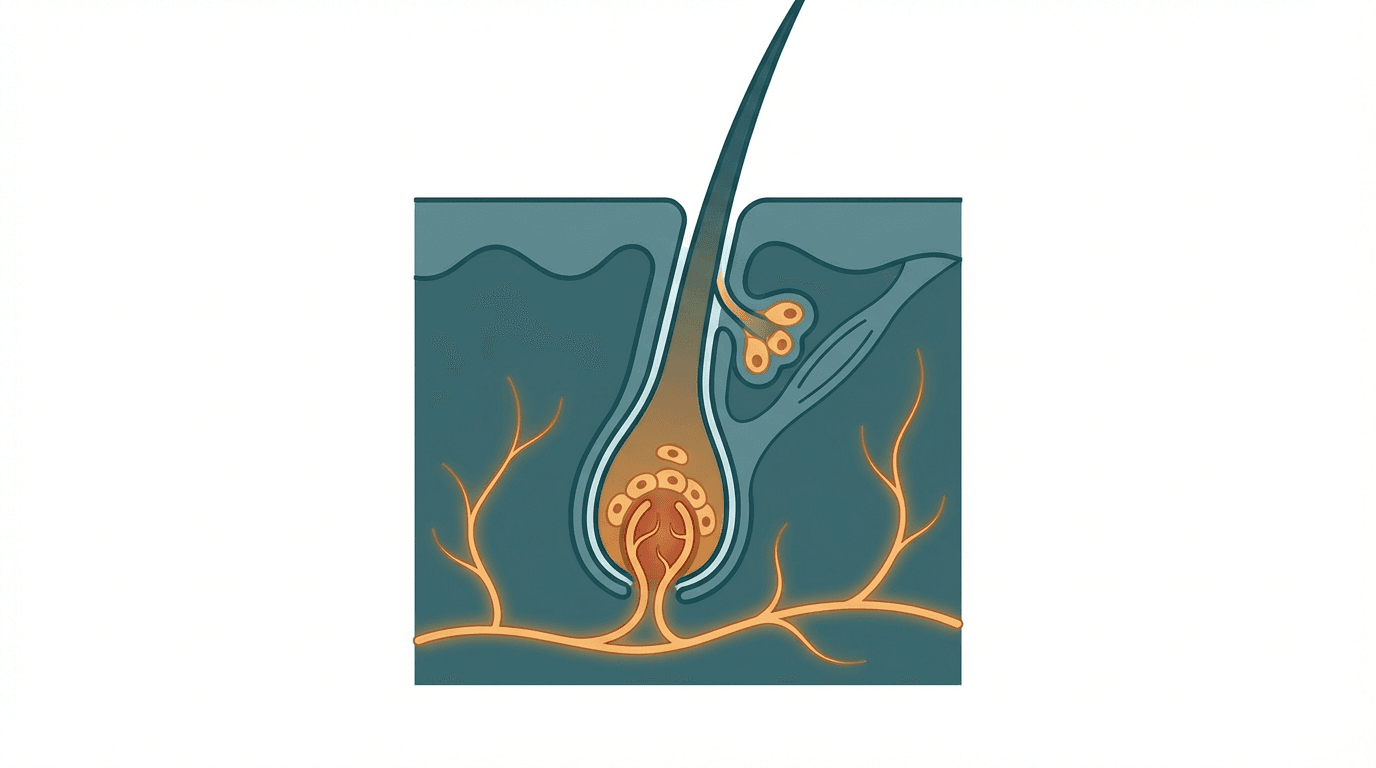
Peptide therapy for hair loss is a rapidly emerging field with promising but still early-stage evidence. Unlike conventional hair loss treatments that primarily block DHT (finasteride) or stimulate blood flow (minoxidil), peptides target the hair follicle microenvironment at a cellular level — activating dormant stem cells in the bulge region, promoting dermal papilla cell proliferation, extending the anagen (growth) phase, and improving scalp vascularization. The most researched peptide for hair growth is GHK-Cu, which has demonstrated ability to increase hair follicle size and stimulate growth factor expression. Thymosin beta-4 (the full protein behind TB-500) has shown the ability to activate follicular stem cells in preclinical models. While the evidence base is growing, peptide-based hair restoration is still largely in the preclinical and early clinical stages.
Best Peptides for Hair Growth
Mechanism: Stimulates dermal papilla cell proliferation, increases follicle size by upregulating growth factors (VEGF, FGF), extends anagen phase duration, and suppresses TGF-β1 which drives catagen (regression) entry
Key benefit: Most clinically supported peptide for hair — increases hair density, thickness, and growth rate while reducing hair follicle miniaturization
Mechanism: Synthetic fragment of thymosin beta-4 that promotes cell migration and differentiation; in hair biology, TB-4 activates hair follicle stem cells (HFSCs) in the bulge region by modulating Wnt signaling
Key benefit: Preclinical evidence shows activation of dormant hair follicle stem cells, potentially restarting growth in follicles that have entered prolonged telogen (resting) phase
Mechanism: The full 43-amino-acid protein (of which TB-500 is a fragment) demonstrated in mouse models to activate hair follicle progenitor cells by sequestering G-actin and enabling cytoskeletal remodeling necessary for stem cell migration
Key benefit: Landmark 2003 Nature study showed thymosin beta-4 promotes hair growth by activating resting hair follicle stem cells — the foundational research behind TB-500's use for hair
Mechanism: Naturally occurring tripeptide that modulates gene expression related to tissue repair and remodeling; upregulates genes involved in hair follicle development including Wnt pathway components and growth factors
Key benefit: The copper-free form of GHK may support follicle health through gene expression modulation, though most hair-specific clinical data is on the copper-bound form (GHK-Cu)
Quick Comparison
| Peptide | Efficacy | Key Benefit | Profile |
|---|---|---|---|
| GHK-Cu | moderate | Most clinically supported peptide for hair — increases hair density, thickness, and growth rate while reducing hair follicle miniaturization | View → |
| TB-500 | emerging | Preclinical evidence shows activation of dormant hair follicle stem cells, potentially restarting growth in follicles that have entered prolonged telogen (resting) phase | View → |
| Thymosin Beta-4 | emerging | Landmark 2003 Nature study showed thymosin beta-4 promotes hair growth by activating resting hair follicle stem cells — the foundational research behind TB-500's use for hair | View → |
| GHK (Glycyl-L-histidyl-L-lysine) | emerging | The copper-free form of GHK may support follicle health through gene expression modulation, though most hair-specific clinical data is on the copper-bound form (GHK-Cu) | View → |
References
- Thymosin beta4 activates integrin-linked kinase and promotes cardiac disease and hair growth (2003) — PubMed
- Tripeptide-copper complex stimulates hair follicle growth in vitro and in vivo (1993) — PubMed
- GHK-Cu may prevent oxidative stress in skin by regulating copper and modifying expression of numerous antioxidant genes (2012) — PubMed
- Thymosin β4 is a potent regulator of hair follicle stem cells (2007) — PubMed
Frequently Asked Questions
Do peptides actually work for hair loss?
Which peptide is best for hair regrowth?
Can TB-500 regrow hair?
How do peptides for hair loss compare to finasteride or minoxidil?
How should I use peptides for hair growth?
Explore next
- GHK-CuMost clinically supported peptide for hair — increases hair density, thickness, and growth rate while reducing hair follicle miniaturization
- TB-500Preclinical evidence shows activation of dormant hair follicle stem cells, potentially restarting growth in follicles that have entered prolonged telogen (resting) phase
- Thymosin Beta-4Landmark 2003 Nature study showed thymosin beta-4 promotes hair growth by activating resting hair follicle stem cells — the foundational research behind TB-500's use for hair
- GHK (Glycyl-L-histidyl-L-lysine)The copper-free form of GHK may support follicle health through gene expression modulation, though most hair-specific clinical data is on the copper-bound form (GHK-Cu)
- GHK-Cu dosage guideEducational reference for GHK-Cu (copper peptide) dosage protocols including subcutaneous injection, topical application, and microneedling as discussed in published research.
- TB-500 dosage guideEducational reference covering TB-500 (Thymosin Beta-4) dosage protocols, including loading and maintenance phases, reconstitution, and administration details as discussed in research literature.