Best Peptides for Sleep Quality (2026 Guide)
A comprehensive guide to the best peptides for improving sleep quality, reducing sleep latency, and enhancing deep sleep stages. Covers DSIP, Selank, Epithalon, and Sermorelin with evidence ratings, mechanisms, and practical protocols.
Overview
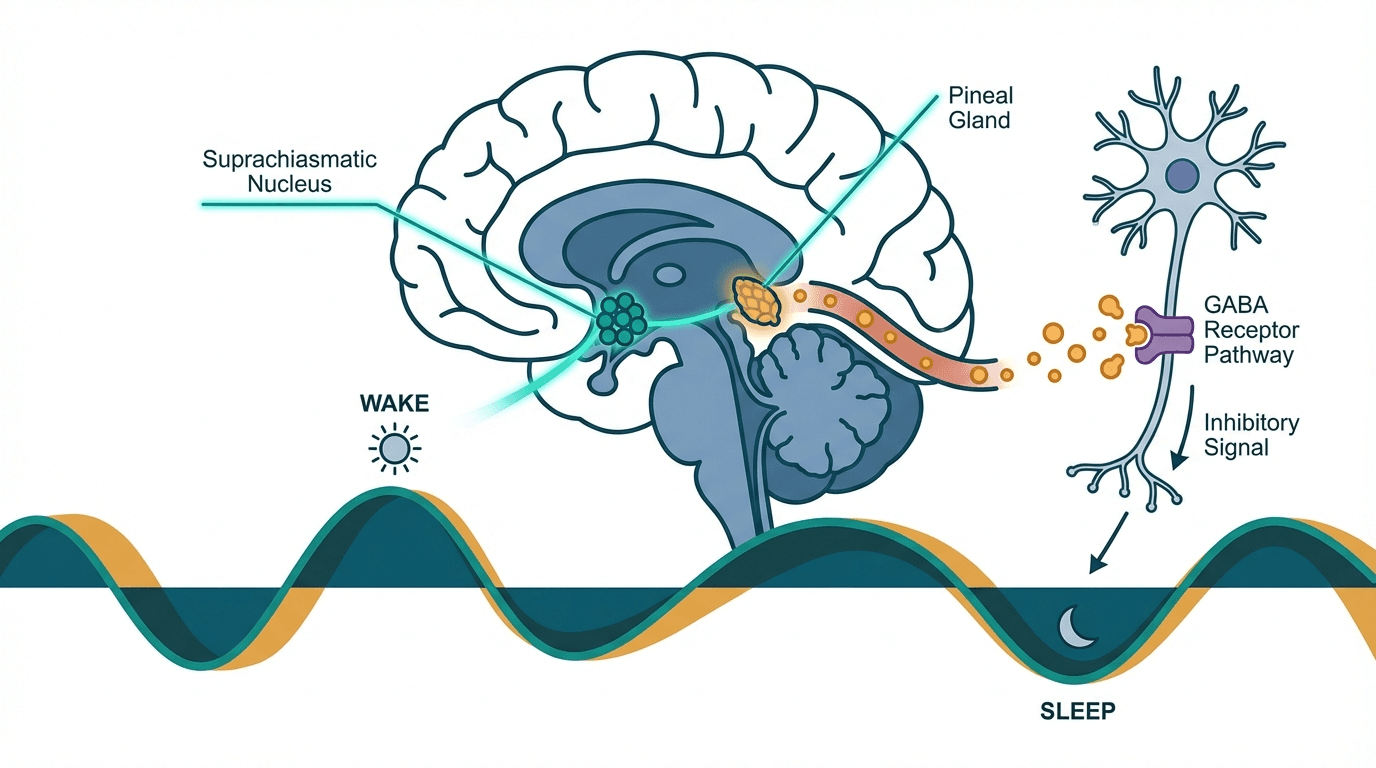
Sleep disorders affect over 70 million Americans, and conventional sleep aids often carry risks of dependence and next-day impairment. Peptides offer a fundamentally different approach by working with the body's endogenous sleep-regulation systems rather than forcing sedation. Delta sleep-inducing peptide (DSIP) directly modulates sleep architecture at the hypothalamic level, while anxiolytic peptides like Selank address the anxiety and HPA-axis dysregulation that frequently underlie insomnia. Growth hormone secretagogues such as Sermorelin enhance slow-wave (deep) sleep by restoring physiological GH pulsatility, and Epithalon's influence on pineal melatonin synthesis supports circadian rhythm integrity — a critical factor in age-related sleep deterioration.
Best Peptides for Sleep Quality
Mechanism: Modulates sleep architecture via hypothalamic sleep-wake centers; promotes delta-wave (slow-wave) sleep through GABAergic and serotonergic pathway modulation
Key benefit: Directly increases deep sleep duration and reduces sleep onset latency without sedative hangover
Mechanism: Anxiolytic action through modulation of GABA-A receptor sensitivity and inhibition of enkephalin-degrading enzymes, reducing HPA-axis hyperactivation
Key benefit: Reduces anxiety-driven insomnia and racing thoughts that prevent sleep onset
Mechanism: Stimulates pineal gland melatonin production via telomerase activation in pinealocytes; restores circadian melatonin secretion patterns that decline with age
Key benefit: Restores natural melatonin rhythms in aging individuals with declining pineal function
Mechanism: Growth hormone-releasing hormone (GHRH) analog that restores physiological GH pulsatility, particularly the large nocturnal GH surge associated with slow-wave sleep
Key benefit: Enhances deep sleep quality through restored nocturnal growth hormone release patterns
Quick Comparison
| Peptide | Efficacy | Key Benefit | Profile |
|---|---|---|---|
| DSIP | high | Directly increases deep sleep duration and reduces sleep onset latency without sedative hangover | View → |
| Selank | moderate | Reduces anxiety-driven insomnia and racing thoughts that prevent sleep onset | View → |
| Epithalon | emerging | Restores natural melatonin rhythms in aging individuals with declining pineal function | View → |
| Sermorelin | moderate | Enhances deep sleep quality through restored nocturnal growth hormone release patterns | View → |
References
- Delta sleep-inducing peptide (DSIP): a still unresolved riddle (1997) — PubMed
- Selank administration affects the expression of some genes involved in GABAergic neurotransmission (2014) — PubMed
- Epithalamin and the pineal gland in the regulation of aging (2002) — PubMed
- Sermorelin: a better approach to management of adult-onset growth hormone insufficiency? (2010) — PubMed
- Growth hormone-releasing hormone and sleep (2007) — PubMed
Frequently Asked Questions
What is the best peptide for improving deep sleep?
How long do sleep peptides take to show results?
Can sleep peptides replace melatonin supplements?
Are sleep peptides safe to combine with each other?
Do sleep peptides cause dependence like traditional sleep medications?
Explore next
- DSIPDirectly increases deep sleep duration and reduces sleep onset latency without sedative hangover
- SelankReduces anxiety-driven insomnia and racing thoughts that prevent sleep onset
- EpithalonRestores natural melatonin rhythms in aging individuals with declining pineal function
- SermorelinEnhances deep sleep quality through restored nocturnal growth hormone release patterns
- DSIP dosage guideEducational reference covering DSIP (Delta Sleep-Inducing Peptide) dosage protocols, administration timing, reconstitution instructions, and sleep research. Dosing information discussed in published studies for informational purposes only.
- Selank dosage guideEducational reference for Selank dosage protocols via intranasal, subcutaneous, and sublingual routes. Covers the synthetic tuftsin analog discussed in Russian clinical research for anxiolytic and nootropic properties.
- Epithalon dosage guideEducational reference covering epithalon (epitalon) dosage protocols, cycling schedules, reconstitution instructions, and telomerase activation research. Dosing information discussed in published studies for informational purposes only.
- Sermorelin dosage guideComplete sermorelin dosage guide with injection protocols, bedtime timing rationale, 5-on/2-off cycling strategy, reconstitution instructions, and stacking considerations. Covers standard and higher dose protocols based on published research and clinical use patterns.