Best Peptides for Weight Loss (2026 Guide)
A comprehensive guide to the best peptides for weight loss, including GLP-1 receptor agonists, GIP/GLP-1 dual agonists, and alternative fat-targeting peptides. Evidence-based efficacy ratings, mechanisms, and protocols.
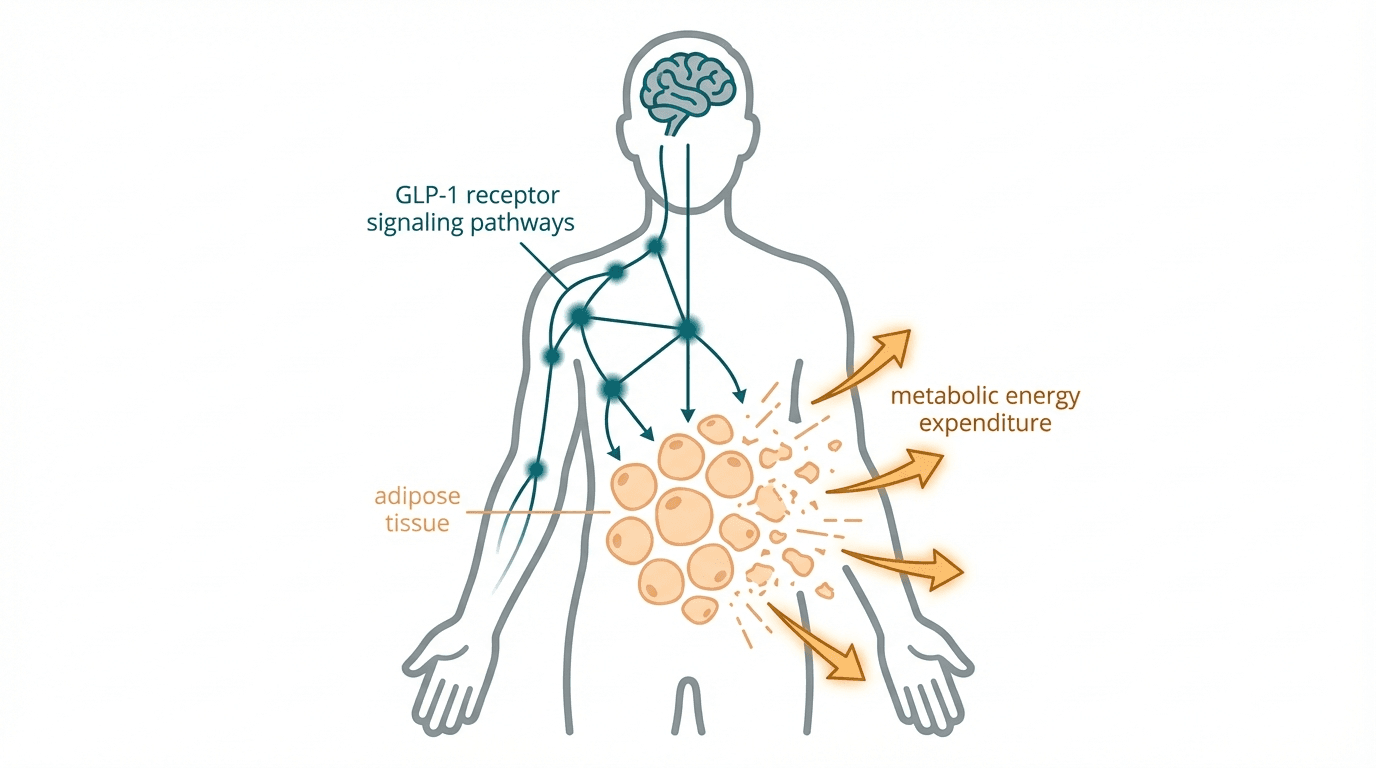
Overview
GLP-1 receptor agonists have fundamentally changed the weight loss landscape, with peptides like semaglutide and tirzepatide delivering 15–22% total body weight loss in clinical trials — results that rival bariatric surgery. These peptides work by mimicking incretin hormones that reduce appetite, slow gastric emptying, and improve insulin sensitivity. Beyond the blockbuster GLP-1 drugs, several investigational peptides target fat metabolism through entirely different pathways, including growth hormone fragment analogues and mitochondrial uncouplers, offering options for patients who cannot tolerate or access GLP-1 therapies.
Best Peptides for Weight Loss
Mechanism: Selective GLP-1 receptor agonist that activates hypothalamic appetite centers, slows gastric emptying, and enhances pancreatic insulin secretion
Key benefit: FDA-approved for chronic weight management with ~15% average body weight loss at 68 weeks
Mechanism: Dual GIP/GLP-1 receptor agonist providing synergistic incretin signaling for superior appetite suppression and metabolic improvement
Key benefit: Highest weight loss of any approved peptide at ~22.5% body weight reduction in the SURMOUNT-1 trial
Mechanism: Triple agonist targeting GLP-1, GIP, and glucagon receptors simultaneously to maximize caloric expenditure and appetite suppression
Key benefit: Phase 2 data showed up to 24% body weight loss at 48 weeks, potentially the most effective weight loss peptide in development
Mechanism: Modified fragment (176–191) of human growth hormone that stimulates lipolysis and inhibits lipogenesis without affecting IGF-1 or insulin levels
Key benefit: Targets fat metabolism directly without the systemic effects of full-length growth hormone
Mechanism: Small molecule inhibitor of nicotinamide N-methyltransferase (NNMT), an enzyme overexpressed in adipose tissue that promotes fat storage
Key benefit: Oral bioavailability and a novel mechanism targeting fat cell metabolism at the epigenetic level
Mechanism: Growth hormone-releasing hormone (GHRH) analogue that stimulates pulsatile GH release, preferentially reducing visceral adipose tissue
Key benefit: FDA-approved for HIV-associated lipodystrophy; reduces visceral fat without significant effects on subcutaneous fat
Quick Comparison
| Peptide | Efficacy | Key Benefit | Profile |
|---|---|---|---|
| Semaglutide | high | FDA-approved for chronic weight management with ~15% average body weight loss at 68 weeks | View → |
| Tirzepatide | high | Highest weight loss of any approved peptide at ~22.5% body weight reduction in the SURMOUNT-1 trial | View → |
| Retatrutide | high | Phase 2 data showed up to 24% body weight loss at 48 weeks, potentially the most effective weight loss peptide in development | View → |
| AOD-9604 | moderate | Targets fat metabolism directly without the systemic effects of full-length growth hormone | View → |
| 5-Amino-1MQ | emerging | Oral bioavailability and a novel mechanism targeting fat cell metabolism at the epigenetic level | View → |
| Tesamorelin | moderate | FDA-approved for HIV-associated lipodystrophy; reduces visceral fat without significant effects on subcutaneous fat | View → |
References
- Tirzepatide once weekly for the treatment of obesity (SURMOUNT-1) (2022) — PubMed
- Two-year effects of semaglutide in adults with overweight or obesity (STEP 5) (2022) — PubMed
- Retatrutide, a GIP, GLP-1 and glucagon receptor agonist, for people with type 2 diabetes: a randomised, double-blind, placebo and active-comparator-controlled, parallel-group, phase 2 trial (2023) — PubMed
Frequently Asked Questions
What is the most effective peptide for weight loss?
How do GLP-1 peptides cause weight loss?
Are there non-injectable peptides for weight loss?
What are the main side effects of weight loss peptides?
Will I regain weight after stopping weight loss peptides?
Explore next
- SemaglutideFDA-approved for chronic weight management with ~15% average body weight loss at 68 weeks
- TirzepatideHighest weight loss of any approved peptide at ~22.5% body weight reduction in the SURMOUNT-1 trial
- RetatrutidePhase 2 data showed up to 24% body weight loss at 48 weeks, potentially the most effective weight loss peptide in development
- AOD-9604Targets fat metabolism directly without the systemic effects of full-length growth hormone
- Semaglutide dosage guideDetailed semaglutide dosage chart covering weight management titration (Wegovy), type 2 diabetes dosing (Ozempic), and oral semaglutide (Rybelsus). Includes compounded reconstitution instructions, side effect profiles, and cycle guidance based on published STEP trial data.
- Tirzepatide dosage guideComplete tirzepatide dosage chart with titration schedule, dose escalation timeline, reconstitution instructions for compounded forms, and side effect management strategies. Educational reference based on published clinical trial data.
- Retatrutide dosage guideRetatrutide dosage guide covering the investigational triple-agonist peptide's dose escalation schedule from Phase 2 trial data, reconstitution instructions, side effect profile, and comparison context with tirzepatide and semaglutide. Educational reference only — retatrutide is not yet FDA approved.
- AOD-9604 dosage guideEducational reference for AOD-9604 (hGH fragment 176-191) dosage protocols discussed in research literature. Covers subcutaneous injection and oral administration approaches for fat loss.