MK-677 (Ibutamoren) vs Ipamorelin
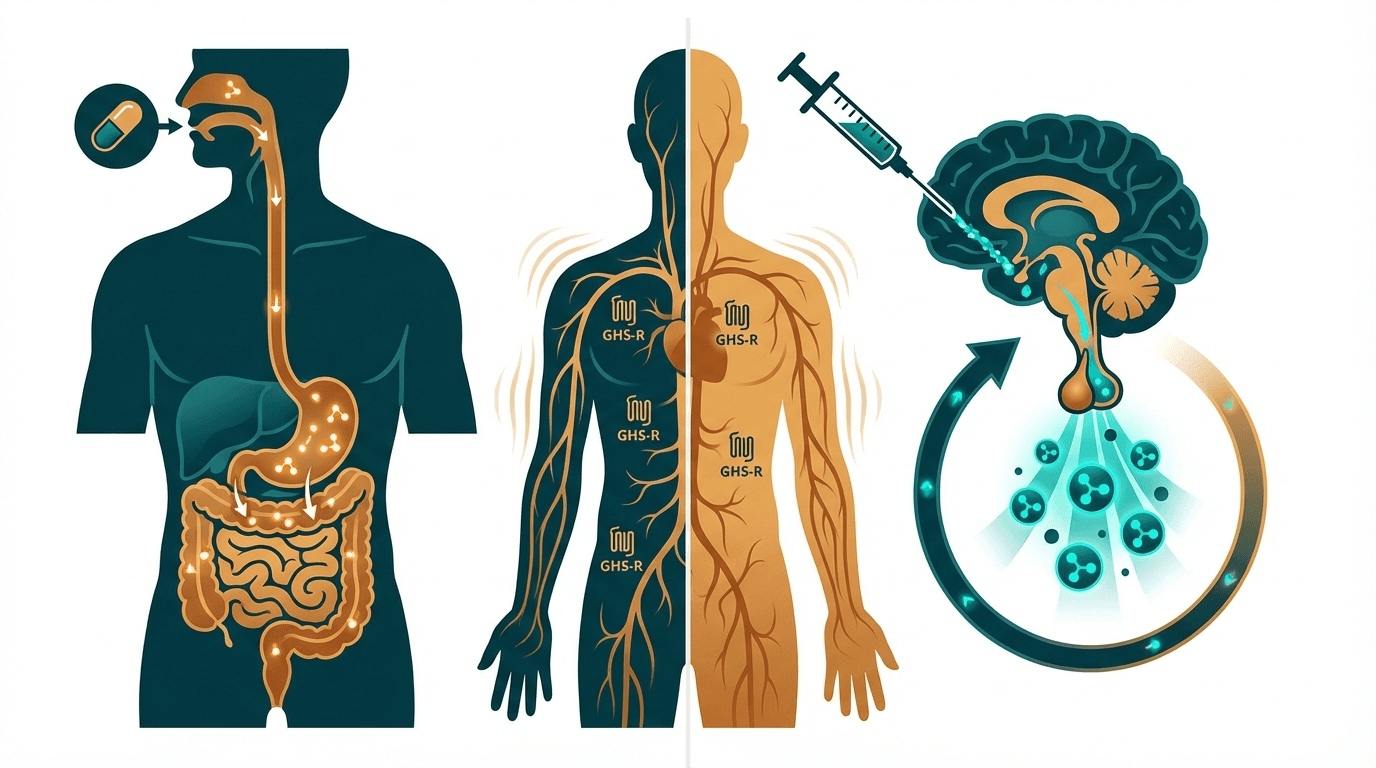
MK-677 (ibutamoren) and ipamorelin both stimulate growth hormone release through ghrelin receptor activation, but they differ dramatically in pharmacology, administration, and side effect profiles. MK-677 is an oral, non-peptide small molecule with a 24-hour half-life that produces sustained, round-the-clock GH and IGF-1 elevation. Ipamorelin is an injectable pentapeptide with a 2-hour half-life that creates clean, pulsatile GH spikes with virtually no impact on cortisol, prolactin, or appetite — making it the more selective and side-effect-friendly option despite requiring injections.
Head-to-Head Comparison
| Criteria | MK-677 (Ibutamoren) | Ipamorelin |
|---|---|---|
| Chemical class | Non-peptide small molecule (growth hormone secretagogue) | Pentapeptide (growth hormone releasing peptide / GHRP) |
| Route of administration | Oral (capsule or liquid) — major convenience advantage | Subcutaneous injection — requires reconstitution and syringes |
| Primary mechanism | Ghrelin receptor (GHS-R1a) agonist with sustained activation | Selective ghrelin receptor (GHS-R1a) agonist with pulsatile activation |
| Half-life | ~24 hours — once-daily oral dosing | ~2 hours — requires 1–3 daily injections |
| GH release pattern | Sustained 24-hour GH and IGF-1 elevation | Acute pulsatile GH spikes mimicking natural secretion |
| Typical dosage | 10–25 mg orally, once daily (usually before bed) | 200–300 mcg subcutaneous, 1–3× daily |
| Appetite stimulation | Significant — can increase appetite dramatically (ghrelin-like effect) | Minimal — highly selective, does not significantly increase hunger |
| Cortisol/prolactin impact | Can moderately elevate cortisol; mild prolactin increase reported | Virtually no cortisol or prolactin elevation at standard doses |
| Effect on blood sugar | Can increase fasting glucose and reduce insulin sensitivity with chronic use | No significant impact on blood glucose or insulin sensitivity |
| Water retention | Common — noticeable water retention and bloating, especially in first weeks | Minimal water retention |
| IGF-1 elevation | Robust and sustained — 40–90% increase in IGF-1 documented in clinical trials | Moderate and transient — peaks post-injection then returns to baseline |
| Research depth | Extensive — multiple Phase II clinical trials in elderly, post-surgical, and obese populations | Moderate — clinical studies focused on GH release kinetics and post-surgical recovery |
When to Choose Each
Choose MK-677 (Ibutamoren)
Users who want oral convenience (no injections), those seeking maximum sustained IGF-1 elevation, bulking phases where increased appetite is a benefit, individuals who tolerate water retention well
Choose Ipamorelin
Users who prioritize clean GH release with minimal side effects, those sensitive to blood sugar or cortisol changes, cutting phases where appetite control matters, athletes wanting pulsatile GH for recovery
Verdict
The choice between MK-677 and ipamorelin comes down to convenience versus selectivity. MK-677 wins on ease of use — oral dosing, once daily, no needles — and produces more robust, sustained IGF-1 elevation. However, it comes with meaningful side effects: increased appetite, water retention, elevated blood sugar, and potential insulin resistance with chronic use. Ipamorelin is the cleaner compound — virtually no off-target effects — but requires daily subcutaneous injections. For pure GH optimization with minimal side effects, ipamorelin is superior. For users who want oral convenience and maximum IGF-1 elevation and can manage the metabolic side effects, MK-677 is a pragmatic choice.
References
- MK-677, an orally active growth hormone secretagogue, reverses diet-induced catabolism (1998) — PubMed
- Two-year effects of ibutamoren on bone mineral density, body composition, and markers of bone turnover in elderly (2001) — PubMed
- Oral administration of growth hormone (GH) releasing peptide-mimetic MK-677 stimulates the GH/IGF-I axis (1997) — PubMed
- Ipamorelin, the first selective growth hormone secretagogue (1998) — PubMed
- Effects of an oral ghrelin mimetic on body composition and clinical outcomes in healthy older adults: a randomized trial (2008) — PubMed
Frequently Asked Questions
Is MK-677 actually a peptide?
Can MK-677 cause diabetes or insulin resistance?
Can I stack MK-677 with ipamorelin?
How long can I safely take MK-677?
Which is more affordable, MK-677 or ipamorelin?
Explore next
- MK-677 dosage guideEducational reference for MK-677 (ibutamoren) oral dosage protocols discussed in research literature. Covers conservative, standard, and advanced dosing approaches for this oral growth hormone secretagogue.
- Ipamorelin dosage guideEducational reference for ipamorelin dosage protocols, optimal timing, and administration guidelines as discussed in published research studies.
- Reconstitution CalculatorCalculate exactly how many units to draw on your syringe. Enter your vial size, bacteriostatic water volume, and desired dose.
- Dosage CalculatorFind evidence-based dosing ranges for any peptide. Adjust for body weight, experience level, and administration route.
- Cost CalculatorEstimate peptide costs per dose, per week, per month, and per year. Enter your vial price and dosing schedule to plan your budget.