Best Peptides for Immune System Support (2026 Guide)
A comprehensive guide to the best peptides for immune system support, immunomodulation, and infection defense. Covers Thymosin Alpha-1, LL-37, KPV, and BPC-157 with evidence ratings, mechanisms, and clinical research.
Overview
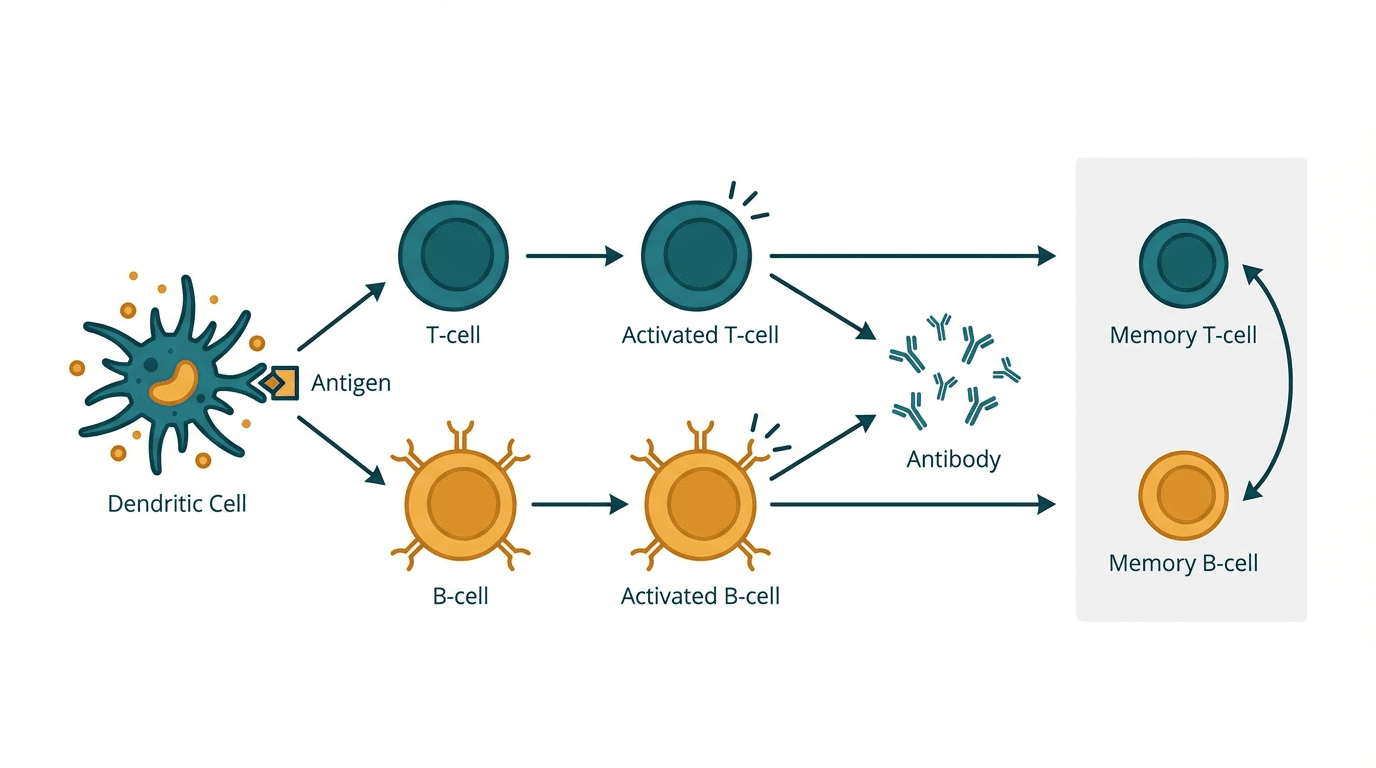
The immune system is deeply regulated by endogenous peptides — from thymic peptides that orchestrate T-cell maturation to antimicrobial peptides that form the first line of defense at mucosal surfaces. Thymosin Alpha-1 stands out as the most clinically validated immunomodulatory peptide, with regulatory approval in over 35 countries for conditions ranging from hepatitis B/C to immunodeficiency states. Unlike broad immunosuppressants or immunostimulants, peptide-based immunomodulators tend to restore immune balance: upregulating function when the immune system is underperforming (infections, immunodeficiency) while dampening excessive inflammatory responses (autoimmunity, chronic inflammation). This bidirectional regulatory capacity makes them particularly interesting for conditions where the immune system is dysregulated rather than simply overactive or underactive.
Best Peptides for Immune System
Mechanism: Thymic peptide that enhances dendritic cell maturation, promotes T-helper cell differentiation (Th1 bias), increases natural killer cell cytotoxicity, and stimulates toll-like receptor signaling — restoring immune surveillance without triggering excessive inflammatory responses
Key benefit: The most clinically validated immunomodulatory peptide — approved in over 35 countries (as Zadaxin) for hepatitis B, hepatitis C, and as an immune adjuvant in cancer therapy and immunodeficiency states
Mechanism: The only human cathelicidin antimicrobial peptide, LL-37 directly kills bacteria by disrupting cell membranes, neutralizes bacterial endotoxin (LPS), modulates neutrophil and macrophage chemotaxis, and promotes adaptive immune responses through dendritic cell activation
Key benefit: Broad-spectrum innate immune defense — effective against gram-positive and gram-negative bacteria, mycobacteria, fungi, and enveloped viruses while simultaneously modulating the inflammatory response to prevent tissue damage
Mechanism: C-terminal tripeptide of alpha-MSH that enters cells and directly inhibits NF-κB activation by preventing IκBα phosphorylation, reducing production of pro-inflammatory cytokines (TNF-α, IL-1β, IL-6, IL-8) and dampening excessive innate immune activation
Key benefit: Potent anti-inflammatory immunomodulator that calms overactive immune responses — particularly effective in mucosal tissues (gut, skin) where immune dysregulation drives chronic inflammatory conditions
Mechanism: Gastric pentadecapeptide with demonstrated cytoprotective and immunomodulatory properties, including modulation of the nitric oxide system, interaction with the dopaminergic system, and promotion of tissue repair that may indirectly support immune function through maintaining barrier integrity
Key benefit: Supports immune function indirectly by maintaining gut barrier integrity — the gut houses 70% of immune tissue (GALT), and BPC-157's ability to heal intestinal mucosa may improve systemic immune regulation
Quick Comparison
| Peptide | Efficacy | Key Benefit | Profile |
|---|---|---|---|
| Thymosin Alpha-1 | high | The most clinically validated immunomodulatory peptide — approved in over 35 countries (as Zadaxin) for hepatitis B, hepatitis C, and as an immune adjuvant in cancer therapy and immunodeficiency states | View → |
| LL-37 | moderate | Broad-spectrum innate immune defense — effective against gram-positive and gram-negative bacteria, mycobacteria, fungi, and enveloped viruses while simultaneously modulating the inflammatory response to prevent tissue damage | View → |
| KPV | moderate | Potent anti-inflammatory immunomodulator that calms overactive immune responses — particularly effective in mucosal tissues (gut, skin) where immune dysregulation drives chronic inflammatory conditions | View → |
| BPC-157 | emerging | Supports immune function indirectly by maintaining gut barrier integrity — the gut houses 70% of immune tissue (GALT), and BPC-157's ability to heal intestinal mucosa may improve systemic immune regulation | View → |
References
- Thymosin alpha 1 — a peptide immune modulator with a broad range of clinical applications (2014) — PubMed
- The human antimicrobial and chemotactic peptides LL-37 and alpha-defensins are expressed by specific lymphocyte and monocyte populations (2000) — PubMed
- Anti-inflammatory effects of alpha-melanocyte-stimulating hormone: the tripeptide KPV and its analogs (2005) — PubMed
- Thymalfasin (thymosin alpha 1) in the treatment of chronic hepatitis B: results of a phase III randomized controlled trial (2002) — PubMed
- LL-37, the only human member of the cathelicidin family of antimicrobial peptides (2003) — PubMed
Frequently Asked Questions
What is the best peptide for boosting the immune system?
Can peptides help with autoimmune conditions?
How does LL-37 fight infections?
Are immune peptides safe to use with other supplements?
How quickly do immune peptides work?
Explore next
- Thymosin Alpha-1The most clinically validated immunomodulatory peptide — approved in over 35 countries (as Zadaxin) for hepatitis B, hepatitis C, and as an immune adjuvant in cancer therapy and immunodeficiency states
- LL-37Broad-spectrum innate immune defense — effective against gram-positive and gram-negative bacteria, mycobacteria, fungi, and enveloped viruses while simultaneously modulating the inflammatory response to prevent tissue damage
- KPVPotent anti-inflammatory immunomodulator that calms overactive immune responses — particularly effective in mucosal tissues (gut, skin) where immune dysregulation drives chronic inflammatory conditions
- BPC-157Supports immune function indirectly by maintaining gut barrier integrity — the gut houses 70% of immune tissue (GALT), and BPC-157's ability to heal intestinal mucosa may improve systemic immune regulation
- Thymosin Alpha-1 dosage guideEducational reference covering thymosin alpha-1 (thymalfasin/Zadaxin) dosage protocols, immune support applications, and administration guidelines as discussed in peer-reviewed research literature. For informational purposes only.
- KPV dosage guideEducational reference covering KPV tripeptide dosage protocols for gut, systemic, and topical anti-inflammatory applications. Dosing information discussed in published research literature for informational purposes only.
- BPC-157 dosage guideComprehensive BPC-157 dosage guide covering subcutaneous, intramuscular, and oral administration protocols. Includes reconstitution instructions, cycle guidance, stacking considerations, and references to published preclinical research on this gastric pentadecapeptide.