Retatrutide vs Tirzepatide
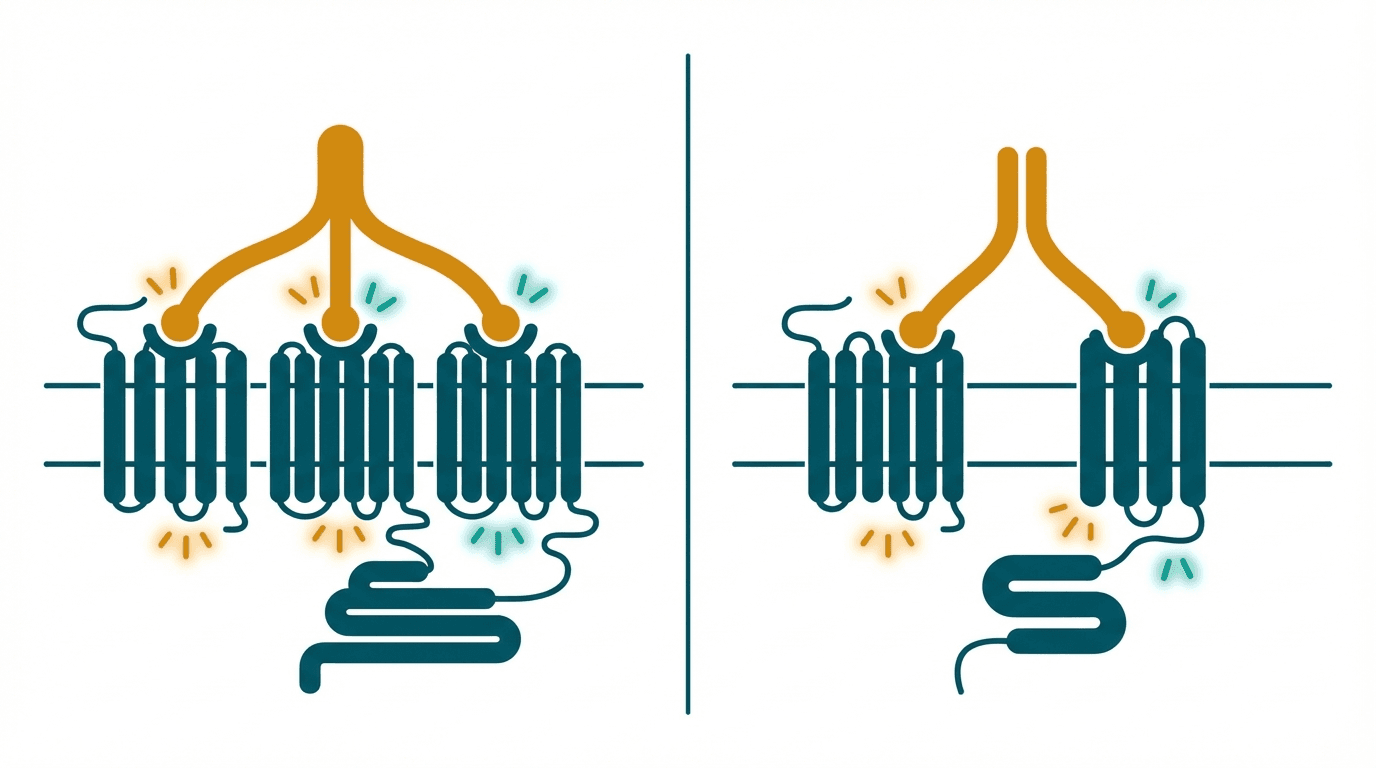
Retatrutide (LY3437943) is a next-generation triple hormone receptor agonist targeting GLP-1, GIP, and glucagon receptors, currently in Phase 3 clinical trials by Eli Lilly. Tirzepatide (Mounjaro/Zepbound) is the dual GIP/GLP-1 agonist from the same company, already FDA-approved. Phase 2 data for retatrutide showed up to 24.2% body weight loss at 48 weeks — potentially surpassing even tirzepatide — driven by the added glucagon receptor activity that increases energy expenditure and hepatic fat oxidation.
Head-to-Head Comparison
| Criteria | Retatrutide | Tirzepatide |
|---|---|---|
| Primary mechanism | Triple agonist: GLP-1 + GIP + glucagon receptors | Dual agonist: GLP-1 + GIP receptors |
| Best for | Maximum weight loss, fatty liver disease (MASLD/MASH), metabolic syndrome | Weight loss, type 2 diabetes, patients needing an approved medication now |
| Route of administration | Once-weekly subcutaneous injection | Once-weekly subcutaneous injection |
| Typical dosage | 1 mg escalating to 8 mg or 12 mg weekly (Phase 2 protocol) | 2.5 mg escalating to 5 mg, 10 mg, or 15 mg weekly |
| Average weight loss | ~24.2% at 48 weeks (12 mg dose, Phase 2) | ~22.5% at 72 weeks (15 mg dose, SURMOUNT-1) |
| Half-life | ~6 days (once-weekly dosing) | ~5 days (once-weekly dosing) |
| FDA status | Not approved — Phase 3 trials ongoing (expected completion 2025–2026) | FDA-approved for obesity (Zepbound, 2023) and T2D (Mounjaro, 2022) |
| Effect on liver fat | Dramatic reduction — glucagon receptor drives hepatic fat oxidation; 86% MASLD resolution in Phase 2 | Significant reduction in liver fat (SYNERGY-NASH trial data) |
| Effect on energy expenditure | Increases resting energy expenditure via glucagon receptor activation | Does not significantly increase energy expenditure |
| Side effects | Nausea (26%), diarrhea (22%), vomiting (14%), constipation (11%) — Phase 2 data | Nausea (31%), diarrhea (23%), vomiting (12%), constipation (11%) |
| Lean mass preservation | Potentially better — glucagon receptor may improve lean-to-fat loss ratio | ~30–40% of weight loss is lean mass (typical for GLP-1 class) |
| Approximate monthly cost | Not commercially available — research compound only | $1,060–$1,200/month (brand) |
When to Choose Each
Choose Retatrutide
Patients awaiting maximum-efficacy obesity treatment, those with fatty liver disease (MASLD/MASH), or individuals interested in the metabolic benefits of glucagon receptor activation — once approved
Choose Tirzepatide
Patients who need an FDA-approved treatment now, those with type 2 diabetes and obesity, or anyone wanting a proven medication with established dosing and safety data
Verdict
Retatrutide represents the most exciting next step in incretin-based obesity treatment, with Phase 2 data showing potentially best-in-class weight loss (~24%) at 48 weeks — a shorter timeframe than tirzepatide's 72-week SURMOUNT-1 trial. The addition of glucagon receptor agonism uniquely drives hepatic fat reduction and increased energy expenditure, making it especially promising for fatty liver disease. However, tirzepatide is available now, FDA-approved, and has a strong clinical evidence base. Retatrutide remains investigational with Phase 3 results pending, so tirzepatide is the clear choice for patients who need treatment today.
References
- Retatrutide, a GIP, GLP-1 and glucagon receptor agonist, for people with type 2 diabetes: a randomised, double-blind, placebo and active-comparator-controlled, parallel-group, phase 2 trial (2023) — PubMed
- Triple-hormone-receptor agonist retatrutide for obesity — a Phase 2 trial (2023) — PubMed
- Tirzepatide once weekly for the treatment of obesity (SURMOUNT-1) (2022) — PubMed
- Glucagon receptor agonism in the treatment of metabolic diseases including NAFLD (2022) — PubMed
Frequently Asked Questions
When will retatrutide be FDA-approved?
Is retatrutide really better than tirzepatide for weight loss?
What makes the glucagon receptor component special?
Can I get retatrutide from research peptide vendors?
Could someone switch from tirzepatide to retatrutide once it is approved?
Explore next
- Retatrutide dosage guideRetatrutide dosage guide covering the investigational triple-agonist peptide's dose escalation schedule from Phase 2 trial data, reconstitution instructions, side effect profile, and comparison context with tirzepatide and semaglutide. Educational reference only — retatrutide is not yet FDA approved.
- Tirzepatide dosage guideComplete tirzepatide dosage chart with titration schedule, dose escalation timeline, reconstitution instructions for compounded forms, and side effect management strategies. Educational reference based on published clinical trial data.