Semaglutide vs Tirzepatide
Semaglutide (Ozempic/Wegovy) and tirzepatide (Mounjaro/Zepbound) are the two dominant FDA-approved peptides for weight loss and type 2 diabetes. Semaglutide is a pure GLP-1 receptor agonist, while tirzepatide is a first-in-class dual GIP/GLP-1 receptor agonist. Head-to-head trials (SURMOUNT and SURPASS programs) consistently show tirzepatide delivers superior weight loss (~22.5% vs ~15% body weight) and comparable or better glycemic control, though both represent a paradigm shift in obesity treatment.
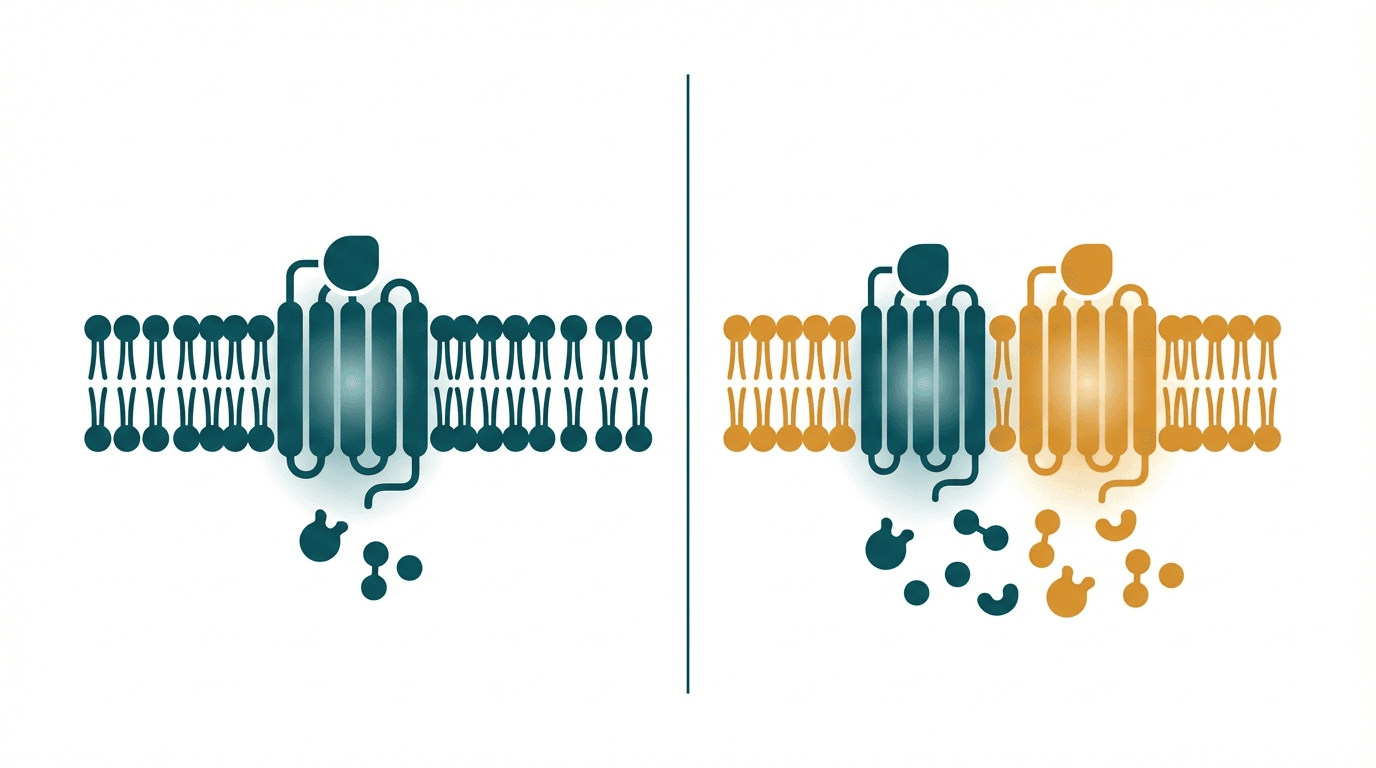
Head-to-Head Comparison
| Criteria | Semaglutide | Tirzepatide |
|---|---|---|
| Primary mechanism | GLP-1 receptor agonist (single incretin) | Dual GIP and GLP-1 receptor agonist (twincretin) |
| Best for | Weight loss, type 2 diabetes, cardiovascular risk reduction | Maximum weight loss, type 2 diabetes, patients who plateau on semaglutide |
| Route of administration | Once-weekly subcutaneous injection (also oral tablet for diabetes) | Once-weekly subcutaneous injection |
| Typical dosage | 0.25 mg escalating to 2.4 mg weekly (Wegovy for weight loss) | 2.5 mg escalating to 5 mg, 10 mg, or 15 mg weekly |
| Average weight loss | ~15% of body weight at 68 weeks (STEP 1 trial) | ~22.5% of body weight at 72 weeks (SURMOUNT-1 trial) |
| Half-life | ~7 days (once-weekly dosing) | ~5 days (once-weekly dosing) |
| FDA status | Approved for obesity (Wegovy, 2021) and T2D (Ozempic, 2017) | Approved for obesity (Zepbound, 2023) and T2D (Mounjaro, 2022) |
| Cardiovascular benefit | Proven 20% MACE reduction (SELECT trial) | SURPASS-CVOT ongoing; expected cardiovascular benefit |
| Side effects | Nausea (44%), vomiting (24%), diarrhea (30%), constipation (24%) | Nausea (31%), vomiting (12%), diarrhea (23%), constipation (11%) |
| A1C reduction | ~1.5–1.8% average reduction | ~2.0–2.3% average reduction |
| Oral formulation available? | Yes (Rybelsus 7 mg or 14 mg daily for T2D) | Oral formulation in development (Phase 3) |
| Approximate monthly cost (US list price) | $1,350–$1,430/month (brand) | $1,060–$1,200/month (brand) |
When to Choose Each
Choose Semaglutide
Patients wanting proven cardiovascular benefits, oral dosing option, or who respond well to GLP-1 monotherapy; also first-line for those with cardiovascular disease
Choose Tirzepatide
Patients seeking maximum weight loss, those who plateaued on semaglutide, better GI tolerability, or needing the most aggressive A1C reduction
Verdict
Tirzepatide delivers consistently greater weight loss than semaglutide in clinical trials — roughly 22.5% vs 15% body weight — and tends to produce fewer GI side effects at equivalent efficacy levels. However, semaglutide has a longer track record, proven cardiovascular outcomes data from the SELECT trial, and an oral option for patients who prefer pills. For pure weight loss maximization, tirzepatide is the stronger choice; for patients prioritizing cardiovascular risk reduction with robust long-term safety data, semaglutide remains the gold standard.
References
- Once-weekly semaglutide in adults with overweight or obesity (STEP 1) (2021) — PubMed
- Tirzepatide once weekly for the treatment of obesity (SURMOUNT-1) (2022) — PubMed
- Tirzepatide versus semaglutide once weekly in patients with type 2 diabetes (SURPASS-2) (2021) — PubMed
- Semaglutide and cardiovascular outcomes in patients with overweight or obesity (SELECT) (2023) — PubMed
Frequently Asked Questions
Can I switch from semaglutide to tirzepatide?
Which has fewer side effects — semaglutide or tirzepatide?
Do you regain weight after stopping semaglutide or tirzepatide?
Are compounded versions of semaglutide and tirzepatide safe?
How do semaglutide and tirzepatide compare in cost?
Explore next
- Semaglutide dosage guideDetailed semaglutide dosage chart covering weight management titration (Wegovy), type 2 diabetes dosing (Ozempic), and oral semaglutide (Rybelsus). Includes compounded reconstitution instructions, side effect profiles, and cycle guidance based on published STEP trial data.
- Tirzepatide dosage guideComplete tirzepatide dosage chart with titration schedule, dose escalation timeline, reconstitution instructions for compounded forms, and side effect management strategies. Educational reference based on published clinical trial data.